Overview
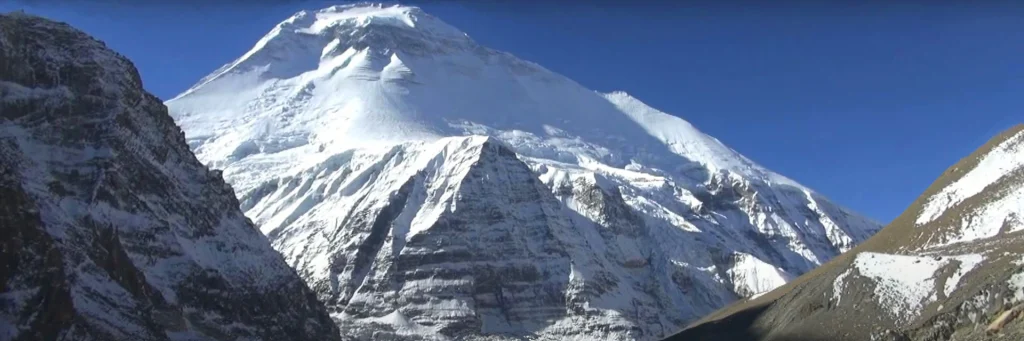
The Tibetan name for Mount Everest is “Chomolangma” which means “Saint Mother”. It has been in common use by Tibetans for centuries (BEFORE 1733 A.D). The height of Everest is 8848m. It was after the years and years of calculation and was announced by Great Trigonometric Survey of India in 1856.
This peak was previously know as Peak XV to the western world. Then In 1865, Everest was given its official English name by Andrew Wough. He was the British surveyor General of India. He recommended this name after his ancestor former chief, Sir George Everest. Andrew was send to Nepal by Sir George Everest for study of the peak. Only in the early 1960s, the Nepalese government gave Mount Everest the official name “Sagarmatha” meaning top of the world. There are 15 recognized route for climbing Mt. Everest.
Every Year in spring and autumn the Mt. Everest Expedition could be scheduled from its South Face that is from Nepal. In autumn, expedition usually stars since last week of August and complete at around end of October. In this period the temperature toward the expedition area is changing from hot to cold. So, the climber has to face the critical situation for acclimatization for approaching to summit.
However in spring, the temperature to the Everest climbing area is getting from cold to hot which is more convenient for approaching to summit after sufficient acclimatization and practice in various camps. Start at the beginning of April and end at the beginning of June is the best recommended period for Everest Expedition in spring.
Thus, our recommendation for Everest summit dreamer is to choose Spring than Autumn. However, we are ready to organize this expedition in Spring, Autumn. Nepali Government authorities also allows climber to climb Everest in summer and winter too.